
Introduction
In today’s rapidly evolving commercial and institutional spaces, energy efficiency is no longer optional; it is a business necessity. With the demand for sustainability increasing across the globe, building owners and managers are under constant pressure to reduce operational costs while maintaining comfort, safety, and security. According to the U.S. Department of Energy, intelligent building automation systems (BAS) have been shown to reduce energy consumption by as much as 30%. These systems integrate various technologies, such as advanced controllers and energy management systems (EMS), to optimise energy use, cut costs, and ensure long-term sustainability.
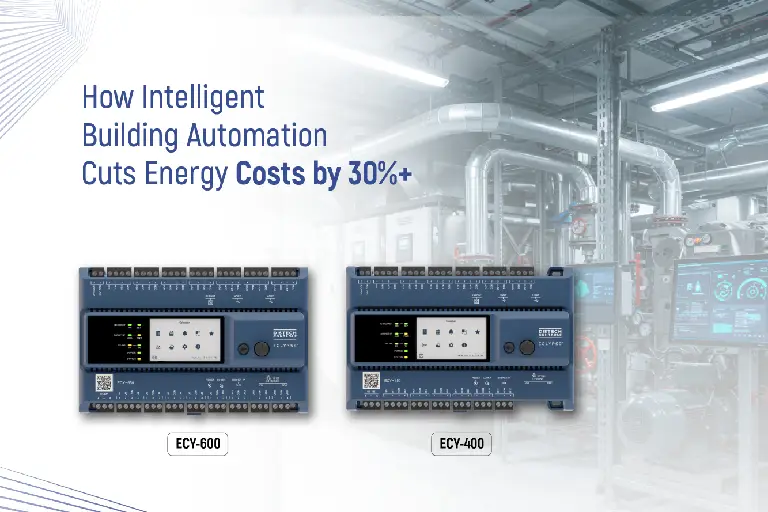
At the core of these advancements is intelligent building management software, which helps automate everything from HVAC and lighting to energy monitoring and security. In this blog, we will explore how intelligent building automation systems leverage cutting-edge technologies like the BACnet IP controllers (ECY-400 & ECY-600 Series) and smart thermostats to not only improve efficiency but also reduce energy costs significantly.
How Intelligent Building Automation Systems Work
A building automation system (BAS) typically oversees several core functions such as lighting, HVAC, security, and energy usage. With advanced integration, these systems work together to provide a centralised platform for building management. The result is a highly efficient, energy-conscious building that adapts to its occupants’ needs in real-time.
Intelligent building management software allows for the seamless integration of these systems. The role of advanced controllers like the ECY-400 & ECY-600 Series in this process is crucial. These controllers enable precise control of HVAC systems, lighting, and more by continuously adjusting the building’s operations based on real-time data collected from various sensors and systems. By communicating via open protocols like BACnet, these systems can ensure that different components of the building, such as HVAC and lighting, work in harmony to maximise energy efficiency and reduce waste.
Energy-Saving Strategies Utilised by Building Automation
Building automation systems leverage real-time data, IoT sensors, and EMS to monitor and control energy usage across all systems in the building. By utilising occupancy sensors, smart thermostats, and automated lighting, BAS ensures that energy is used only when and where it’s needed.
For example, smart thermostats can adjust the temperature based on real-time occupancy data, reducing energy waste during unoccupied hours. Similarly, smart lighting solutions automatically adjust based on occupancy or ambient light conditions, ensuring that lights are on only when necessary. Additionally, energy management systems analyse data to make informed decisions on how to optimise the performance of HVAC systems, further reducing energy consumption.
Another important tool in energy savings is the EC-Multi-Sensor Series, which helps monitor various environmental factors such as temperature, humidity, and occupancy levels. These sensors provide actionable insights that can guide energy-saving decisions, ensuring that building systems only use the energy needed for optimal performance.
ROI and Long-Term Savings with Building Automation
Investing in intelligent building management systems has a clear return on investment (ROI). The upfront cost of installing advanced systems and smart controllers is quickly offset by significant energy savings, extended equipment lifespan, and reduced maintenance costs. A well-implemented BAS not only optimises energy consumption but also improves the longevity of equipment, reducing the need for costly repairs and replacements.
Buildings equipped with intelligent controls have seen energy savings ranging from 20% to 30%, according to multiple industry reports. For example, integrating a BACnet-based energy management system with the HVAC system allows for dynamic control, cutting unnecessary energy consumption during off-peak hours and adjusting settings based on real-time building usage. This results in significant reductions in energy bills and maintenance costs.
Overcoming Challenges and Integration
Despite the clear advantages, many businesses face challenges when integrating intelligent building systems. These challenges often include initial costs, system compatibility, and the complexity of integrating new systems with legacy infrastructure. However, these challenges are easily overcome with the right approach.
One solution to this challenge is selecting products and systems that are compatible with open communication protocols like BACnet. BACnet is a standard for building automation and control networks, ensuring that systems from different manufacturers can communicate effectively. Messung BACD, as the authorised distributor for Distech Controls, provides solutions that are fully BACnet-compliant, ensuring that existing building management systems (BMS) can seamlessly integrate with new, advanced technologies. This ease of integration helps reduce installation time, costs, and potential disruptions during the transition process.
Future Trends: Intelligent Energy Management
The future of building automation is moving towards smarter, more integrated systems. With the increasing adoption of the Industrial Internet of Things (IIoT), buildings will become even more intelligent, enabling better energy management, predictive maintenance, and improved occupant comfort. IoT devices, such as smart sensors and connected HVAC units, will continue to play a crucial role in optimising building operations.
Machine learning and AI are also making their way into building automation. These technologies will be able to predict energy demand and adjust building systems accordingly, further enhancing energy efficiency and reducing costs. As these technologies continue to evolve, we can expect even more advanced energy management features to become standard in buildings worldwide.
Conclusion
Incorporating intelligent building automation systems into commercial and institutional buildings is no longer just an option; it is a strategic investment for long-term operational savings and sustainability. With the right integration of smart thermostats, energy management systems, advanced controllers, and IoT sensors, businesses can reduce energy costs by 30% or more, while improving overall building performance and occupant comfort.
At Messung BACD, we offer a wide range of solutions, including BACnet controllers, EMS integration, and advanced energy-saving technologies from Distech Controls. By embracing intelligent building management, you are not just saving money; you are future-proofing your building and ensuring sustainability for years to come.
If you’re ready to enhance your building’s energy efficiency, contact us today and explore how our intelligent building solutions can make a difference.