
Introduction
In today’s modern buildings, climate control is a crucial aspect of creating comfortable and energy-efficient environments. Among the key systems that drive climate control, chiller plants play a central role. A chiller plant management system ensures that cooling demands are met efficiently and effectively. However, as energy consumption continues to be a significant concern in commercial and institutional buildings, optimising these systems has become a priority. Optimising chiller plants can result in significant energy savings, reduced operational costs, and extended system lifespan. This blog will explore how advanced controls, redundancy, and the integration of modern building automation and control systems can help achieve chiller plant optimisation.
Understanding Chiller Plant Optimisation
Chiller plant optimisation refers to the use of advanced technologies and systems to maximise the performance and efficiency of chiller plants. It is the process of adjusting the cooling system in real-time based on current building conditions and demand. A chiller plant optimiser ensures that the system operates at peak efficiency, without unnecessary energy waste, while also maintaining the required comfort levels for building occupants.
A chiller plant management system (CPMS) integrates cooling operations with the overall building automation system (BAS). This system works in tandem with other building systems, such as HVAC, lighting, and energy management, providing a comprehensive solution to building operations. Through advanced controllers and real-time data collection, the chiller plant optimiser adjusts performance to reduce energy consumption, prevent system overloads, and maintain stable conditions within the building.
The Role of Advanced Controls in Chiller Plant Efficiency
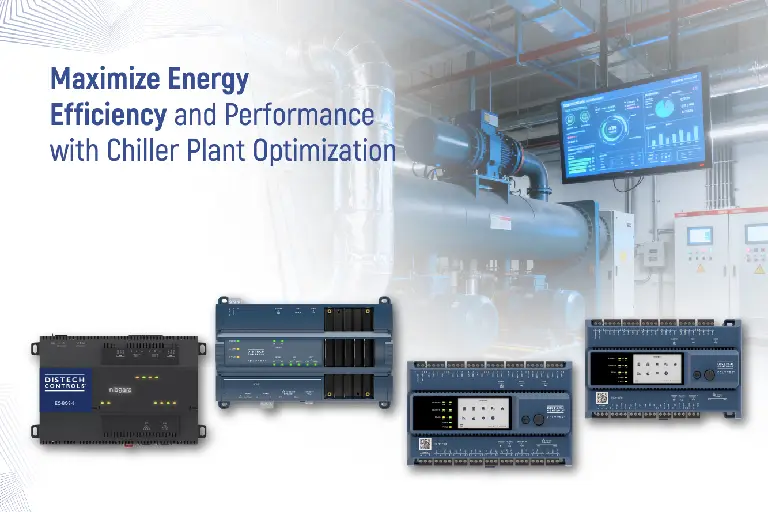
Advanced controllers, such as the EC-BOS 9, ECY-APEX and the ECY-400, ECY-600 Series from Distech Controls, are key components in optimising chiller plant efficiency. These controllers enable the system to operate in a more intelligent and dynamic way. They use real-time data to adjust the chiller plant’s performance based on factors like temperature, pressure, and cooling load. With these systems, building managers can automate the chiller plant’s operation, ensuring that energy use is optimised without sacrificing comfort or performance.
The use of variable frequency drives (VFDs) is another important element in chiller plant optimisation. VFDs adjust the speed of motors based on real-time load conditions, allowing the system to run more efficiently. Advanced sensors also play a significant role by continuously monitoring conditions like air temperature, pressure, and humidity. This data is used by the control system to fine-tune the operation of the chiller plant and ensure that it operates as efficiently as possible.
Redundancy in Chiller Plants: Ensuring Reliability and Longevity
In critical facilities, such as data centres, hospitals, and large commercial buildings, system reliability is paramount. Downtime in these environments can lead to significant losses, both financially and operationally. Redundancy in chiller plants is essential to ensuring that cooling is maintained at all times, even if a component or system fails.
Redundancy in control systems (including software and hardware) and cooling units prevents failures from causing significant disruptions. For instance, the use of redundant pumps and controllers ensures that if one component fails, another can take over without interrupting cooling. This level of redundancy not only enhances system reliability but also extends the lifespan of the chiller plant, reducing the need for costly repairs and replacements.
Energy Savings with Chiller Plant Optimisation
One of the key benefits of chiller plant optimisation is energy savings. In commercial buildings, chiller plants often account for a large portion of energy consumption. By implementing advanced controls and optimising plant performance, energy usage can be significantly reduced.
For example, a study conducted by the U.S. Department of Energy found that optimising chiller plant systems could result in energy savings of up to 30%. This is achieved by ensuring that the system only operates when needed and at the most efficient settings. Additionally, using real-time data to adjust the system based on occupancy and environmental conditions prevents energy waste.
By incorporating IoT-enabled sensors and energy management systems (EMS), building managers can track energy consumption and identify areas for improvement. These systems provide valuable insights into how the chiller plant operates and highlight inefficiencies that can be addressed.
Integration of Chiller Plants with Building Management Systems
A key aspect of chiller plant optimisation is the integration of the plant with the building management system (BMS). Through the use of BACnet and other open protocols, chiller plants can communicate seamlessly with other building systems, such as HVAC, lighting, and security.
An integrated building management system provides a centralised platform for monitoring and controlling all building systems, including the chiller plant. This allows building managers to have a holistic view of their building’s performance and make data-driven decisions to optimise energy usage, improve occupant comfort, and reduce operational costs.
The integration of chiller plants with BMS also enables predictive maintenance. By continuously monitoring system performance, the BMS can alert facility managers to potential issues before they lead to system failures. This helps to prevent costly repairs and downtime, while also ensuring that the chiller plant operates efficiently.
The Role of Sensors and IoT in Chiller Plant Optimisation
The integration of IoT sensors into chiller plant systems is another critical component of optimisation. These sensors collect real-time data on factors like temperature, humidity, pressure, and airflow, which are used to adjust the operation of the system.
For example, pressure-sensing BMS can monitor pressure levels within the system to ensure that they remain within optimal ranges. Similarly, air velocity sensors help ensure that airflow is balanced and that the system is not overworking. These sensors feed data to the control system, which then adjusts the chiller plant’s operation to maximise efficiency and reduce energy consumption.
The use of IoT sensors allows for continuous monitoring, ensuring that the chiller plant operates at its most efficient levels. With the ability to collect data in real-time, building managers can identify inefficiencies and take corrective action quickly, further improving energy savings and system performance.
Conclusion
Chiller plant optimisation is essential for maintaining energy efficiency, reducing operational costs, and ensuring system reliability in modern buildings. By incorporating advanced controllers, redundant systems, and integration with building management systems, organisations can achieve significant savings while improving system performance. The use of IoT sensors and real-time data further enhances optimisation, ensuring that chiller plants operate efficiently while maintaining occupant comfort.
For building managers and facility owners, investing in chiller plant optimisation is not just about reducing costs; it is about future-proofing their building systems. With the right strategy, building managers can ensure that their chiller plant operates at peak performance, contributing to long-term energy savings and sustainability. By adopting open, integrated systems like BACnet/IP, buildings can achieve greater flexibility, interoperability, and efficiency in managing their cooling needs.